

Why Response Time Matters in In Hospital Cardiac Arrest
Introduction
In-hospital cardiac arrest (IHCA) continues to be one of the most serious emergencies in current medical practice. Despite taking place within the confines of a medical facility, where devices and trained professionals are on hand, survival is often based on one key thing: response time.
Every second is crucial. How quickly a cardiac arrest is recognized and treated can make the difference in whether a patient survives with good brain function or suffers permanent damage.
Understanding In Hospital Cardiac Arrest
An in hospital cardiac arrest occurs when a patient’s heart suddenly stops beating effectively while they are already in a healthcare facility. In hospital cardiac arrest, unlike out of hospital arrests, tends to happen in already monitored patients. This provides a chance for quick intervention if systems are efficient and teams well trained. But delays can occur even inside hospitals.
Common causes include:
1. Failure to recognize early clinical deterioration
2. Delayed activation of emergency response teams
3. Poor coordination between team members
4. Lack of clear and standardized protocols
This is where structured clinical training becomes essential.
The Critical First 4 to 6 Minutes
The brain cells can begin to die within 4–6 minutes without oxygen. The chances of survival can decrease by about 7–10% for every minute that defibrillation is delayed in shockable rhythms (e.g. ventricular fibrillation).
A rapid response includes several key actions:
- Immediate recognition of cardiac arrest
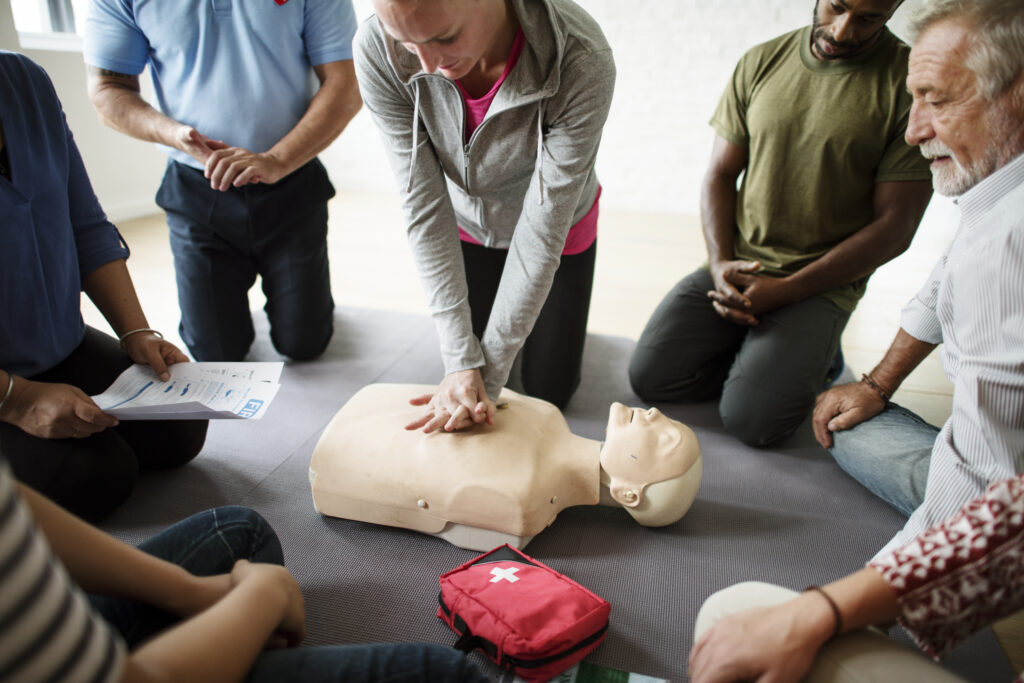
- Rapid initiation of high-quality CPR
- Early defibrillation when required
- Prompt advanced life support interventions
Hospitals that conduct regular emergency drills perform better in these situations. Their teams respond faster. Survival rates improve. Neurological outcomes are also better.
Why Response Time Makes the Difference
1. Early CPR Maintains Blood Flow
High-quality chest compressions maintain minimal circulation to the brain and vital organs. This continues until definitive treatment begins.
Even small delays reduce effectiveness. Blood flow drops quickly. The risk of brain injury increases.
2. Early Defibrillation Restores Cardiac Rhythm
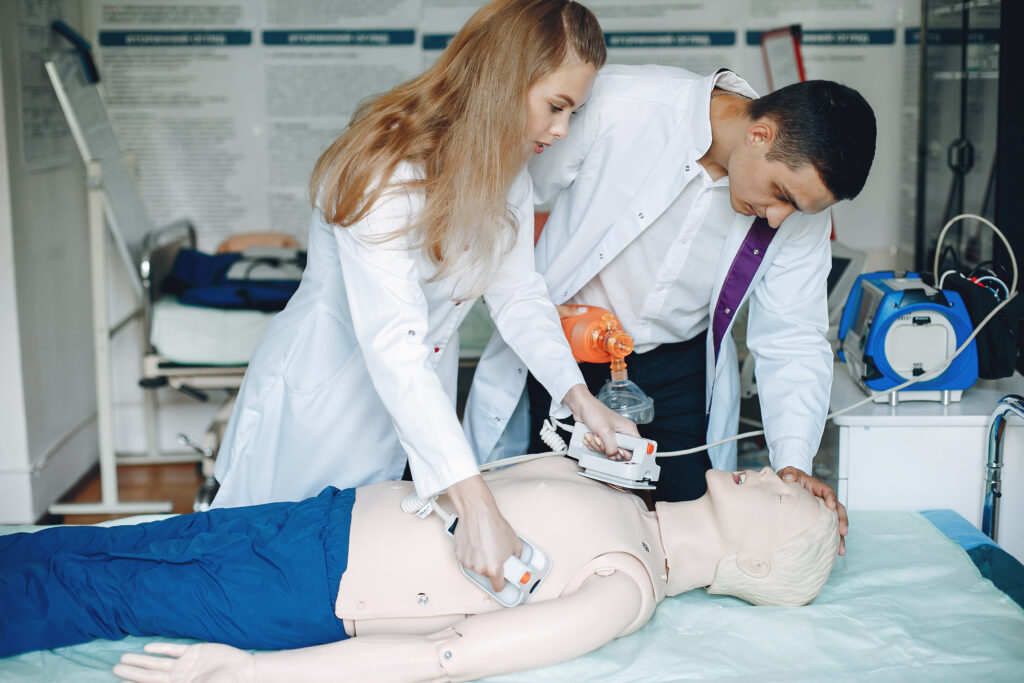
Shockable rhythms require immediate defibrillation. Accessible defibrillators and trained staff decrease time to shock improving survival.
3. Coordinated Team Response Reduces Errors
Clear role allocation and rehearsed emergency protocols reduce confusion. When teams practice regularly, intervention becomes systematic rather than chaotic.
4. Reduced No Flow Time Protects Brain Function
The longer the brain is deprived of circulation greater is the risk of permanent damage. Early response reduces the no flow time and increases the potential for meaningful recovery.
The Role of Structured Clinical Training
Improving response time is not accidental. It is the result of organized, competency-based training.
Effective emergency training programs focus on:
- Early recognition of patient deterioration
- Rapid activation of code teams
- Simulation-based resuscitation training
- Mastery of life support protocols
- Team communication and leadership
Courses such as BLS, ILS and ACLS equip healthcare professionals with standardized approaches, reducing hesitation and improving response efficiency. Simulation training allows healthcare teams to practice rare but high-risk events. This builds muscle memory and improves interprofessional coordination.
Building a Culture of Rapid Response
Hospitals that give priority to rapid intervention implement:
- Early Warning Score systems
- Rapid Response Teams(RRTs)
- Regular mock code drills
- Continuous performance audits
- Post event debriefing sessions
This systems-based approach guarantees that response time does not depend on individual heroics, but rather on institutional processes.
Data Driven Improvement
Many hospitals track key performance indicators to improve cardiac arrest response. These include:
- Time to CPR initiation
- Time to defibrillation
- Code team arrival time
- Return of spontaneous circulation(ROSC) rates
Tracking these metrics helps identify gaps. Hospitals can refine their emergency response systems accordingly.
Structured training programs are integral to conceptualizing these metrics into quantifiable gains.
Conclusion
In an in hospital cardiac arrest, survival is not determined only by advanced equipment or technology. It depends on how quickly and effectively a trained team responds. Every minute saved improves the chances of survival. It also protects neurological function.
For healthcare institutions where patient safety is a priority, structured clinical training becomes essential.
Through competency based education, simulation training, and standardized life support certification, MGHCS supports healthcare professionals in delivering faster, safer and more coordinated emergency care.
FAQs
1. Why is response time critical in in-hospital cardiac arrest?
Response time in in-hospital cardiac arrest is critical because brain injury can begin within 4–6 minutes without oxygen. Faster recognition and intervention significantly improve survival and neurological outcomes.
2. How can hospitals improve response time in cardiac arrest situations?
Hospitals can improve response time in in-hospital cardiac arrest by implementing structured protocols, conducting regular mock drills, training staff in BLS, ILS and ACLS and establishing rapid response teams.
3. What role does training play in improving response time?
Structured clinical training helps healthcare professionals recognize emergencies early, respond quickly and follow standardized protocols, which reduces delays and improves patient outcomes.
4. How does defibrillation timing impact cardiac arrest survival?
Early defibrillation is crucial in shockable cardiac arrest rhythms. Delays in defibrillation reduce the chances of survival, making rapid access to defibrillators and trained staff essential.
0 comments